History of Bendochy Church
Bendochy is one of the oldest ecclesiastical sites in Scotland and the history of Bendochy Church is, in many respects, the story of religion in Scotland during the past 900 years.
Long before the Roman monastic orders arrived, Celtic Christian monks called the Culdees settled in various parts of Scotland including Bendochy. It was a sacred site centuries before a Cistercian Abbey was built in Coupar Angus.
In the reign of Alexander I (1107-1124) the monarch said one thousand parishes would be created in Scotland. The parish boundaries were designated by his successor David I and the parish of Bendochy at that time stretched over the River Isla to the south and included what is now Coupar Angus. The parish of Coupar Angus did not exist until after the Reformation.
In 1164 Malcolm IV founded a Cistercian Abbey in Coupar Angus. The land around the Abbey was gifted by his brother William the Lion to the monks and this included Bendochy Church which the monks managed until the Reformation. The monks regularly crossed the River Isla just above the church to visit it and Coupar Grange, the home farm of the Cistercian Abbey,
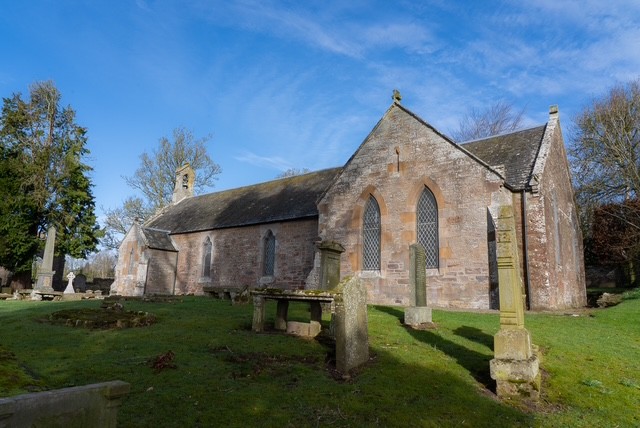
The church has an idyllic situation beside the River Isla, surrounded by the rich agricultural land of Strathmore. The current church walls are seven hundred years old and for most of that time the church was a simple whitewashed rectangular building surrounded by a cemetery and a glebe It is cleverly sited above the water of the River Isla which floods most years.
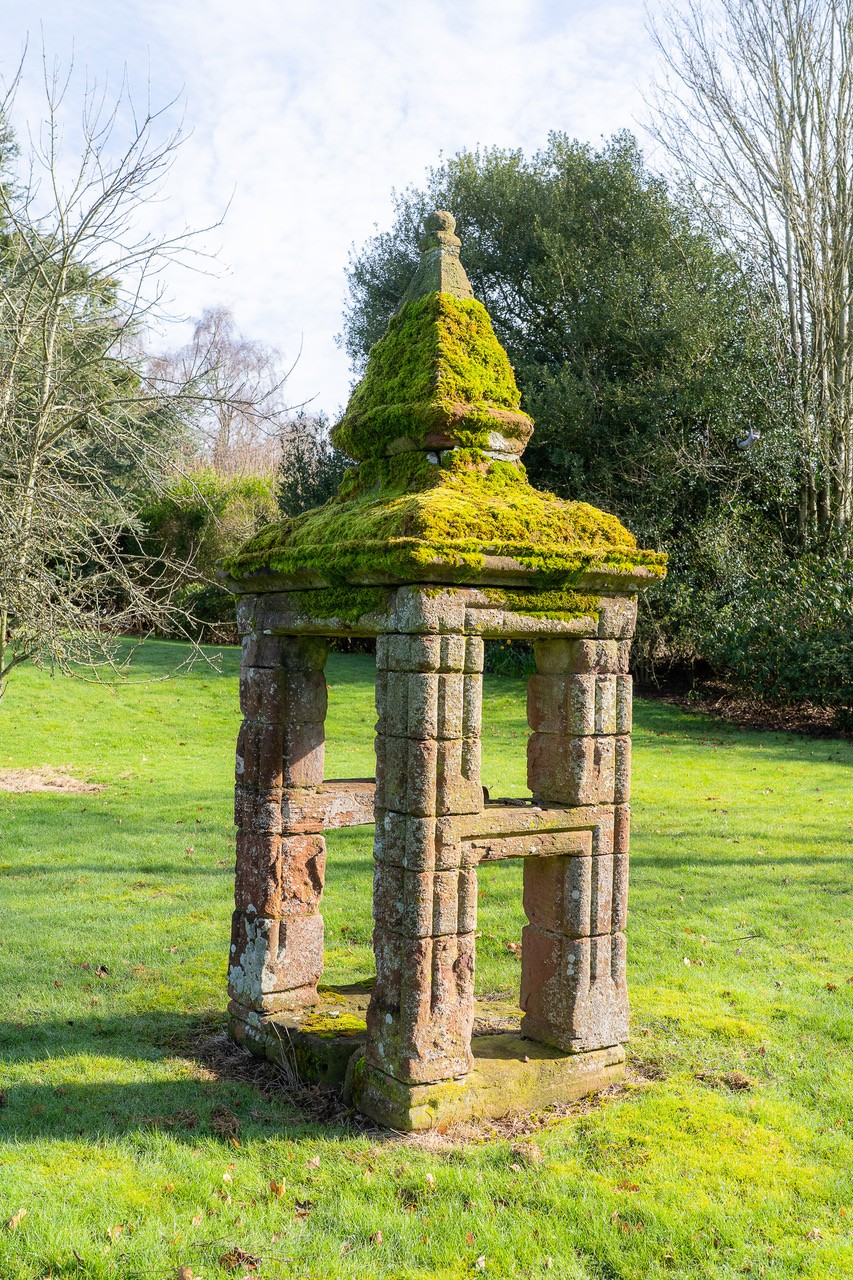
The building has been modified over the years, most notably in 1885 when the architect Alexander Johnston added shallow transepts at the east end, a vestry on the north side and a porch on the south side. Gothic windows were also installed. A new belfry was built, and the old belfry was removed and placed in the manse garden. The original bell was cast in Holland in 1608 and is still rung every Sunday before church service. The graveyard has many interesting memorial inscriptions from the seventeenth century. Some, such as 'the green man' headstone have been described by historians. as possibly being unique in Scotland.
At the entrance to the cemetery is a war memorial to remember the fallen in two world wars. It is a Commonwealth graveyard. The church building is Category B listed, the war memorial is C listed and the old belfry is B listed.
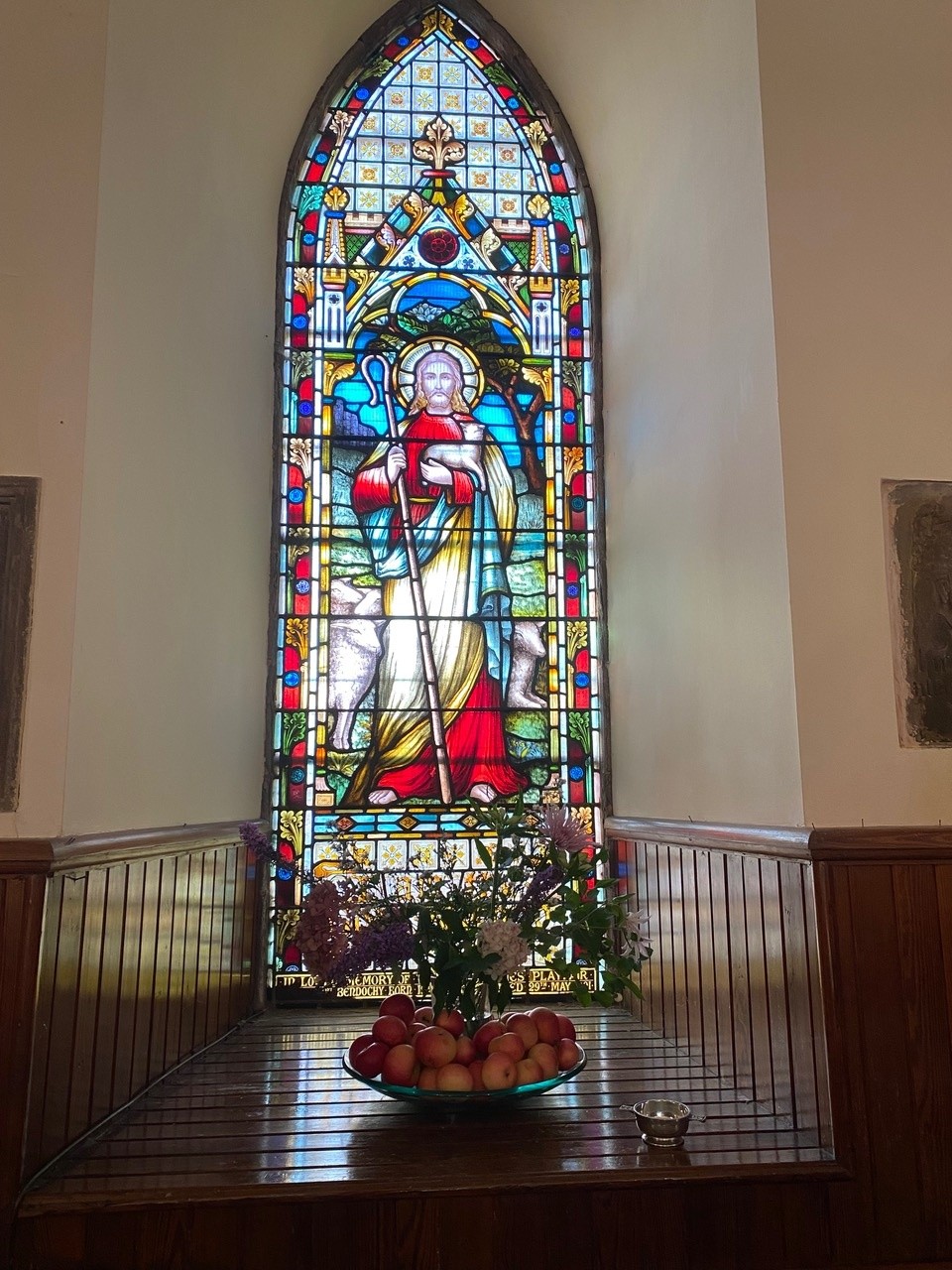
After the Reformation box pews were installed in the church and a fine carved oak pulpit was placed in the centre of the east wall where it stands today. It is similar to the pulpit in St Andrews where John Knox is said to have preached the only two of their kind in Scotland. The original sneck is still in use. There are beautiful windows and pre-reformation features.
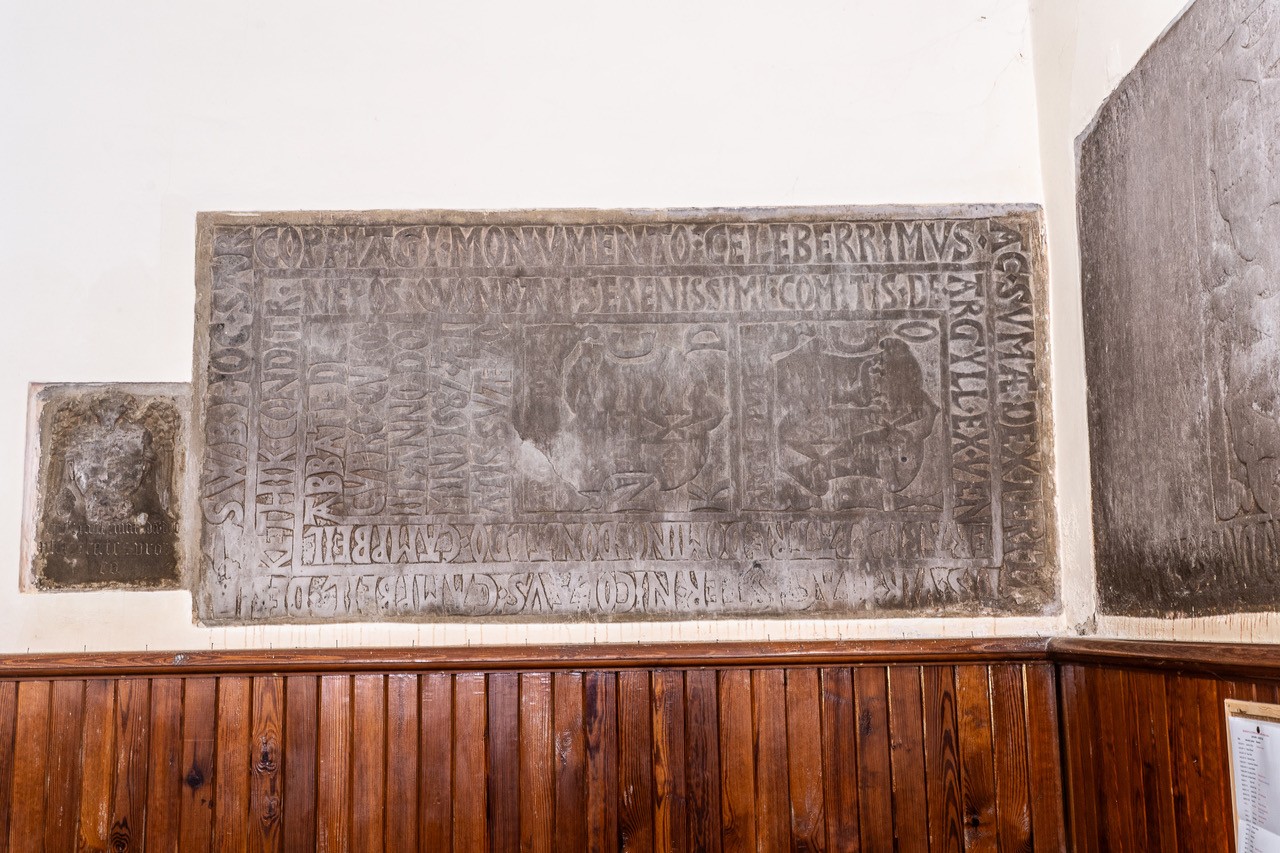
Within the wall is an aumbry with the initials WT in memory of William Turnbull Abbot of Coupar Angus from 1500 until 1510. A simple cross is on the wall above the pulpit and there is also the Royal Crest of Scotland on the wall as a reminder that the choice of minister was once in the gift of the monarch. When the church was renovated in 1885 five recumbent stones were removed from the earthen floor and incorporated into the walls inside the church. The oldest stone, to a catholic worker called Matilda, is dated 1450 and is unique in Scotland. Others commemorate the sons of Donald Campbell, the last Abbot of Coupar Angus Abbey and another commemorates Leonaird Leslie, Commendator of Coupar Angus Estates, erected 1605.
Donald Campbell was the grandson of the Earl of Argyll. He died in 1562 or early 1563 and it is likely he was leaning to the reformed movement before his death. In typical Campbell fashion he was considered to be an able abbot, a diplomat and a politician who managed the transition to Protestantism astutely granting the monastic lands around Bendochy to his sons David and Nicholas.
Many clerics are buried under the floor of the church, the last being Rev James Playfair who ministered from 1785 to 1811. He was a keen apiarist and the author of the Bendochy section of the First Statistical Account of Scotland in 1795. Many members of the Playfair Family are buried at Bendochy, and family members visit the church frequently, coming from home and abroad.
Other stones in the walls of the church commemorate previous ministers including Rev James Strachan Barty who was Moderator of the General Assembly in 1868.
John Honey was minister at Bendochy from 1812 until 1814 when he died prematurely. As a student in St Andrews, he had swum out five times to a stricken ship, the Janet McDuff, in St Andrews Harbour to rescue all crew members. His heroic act is commemorated by students in the annual pier walk.
Bendochy continues to inspire all who value Scotland's heritage.